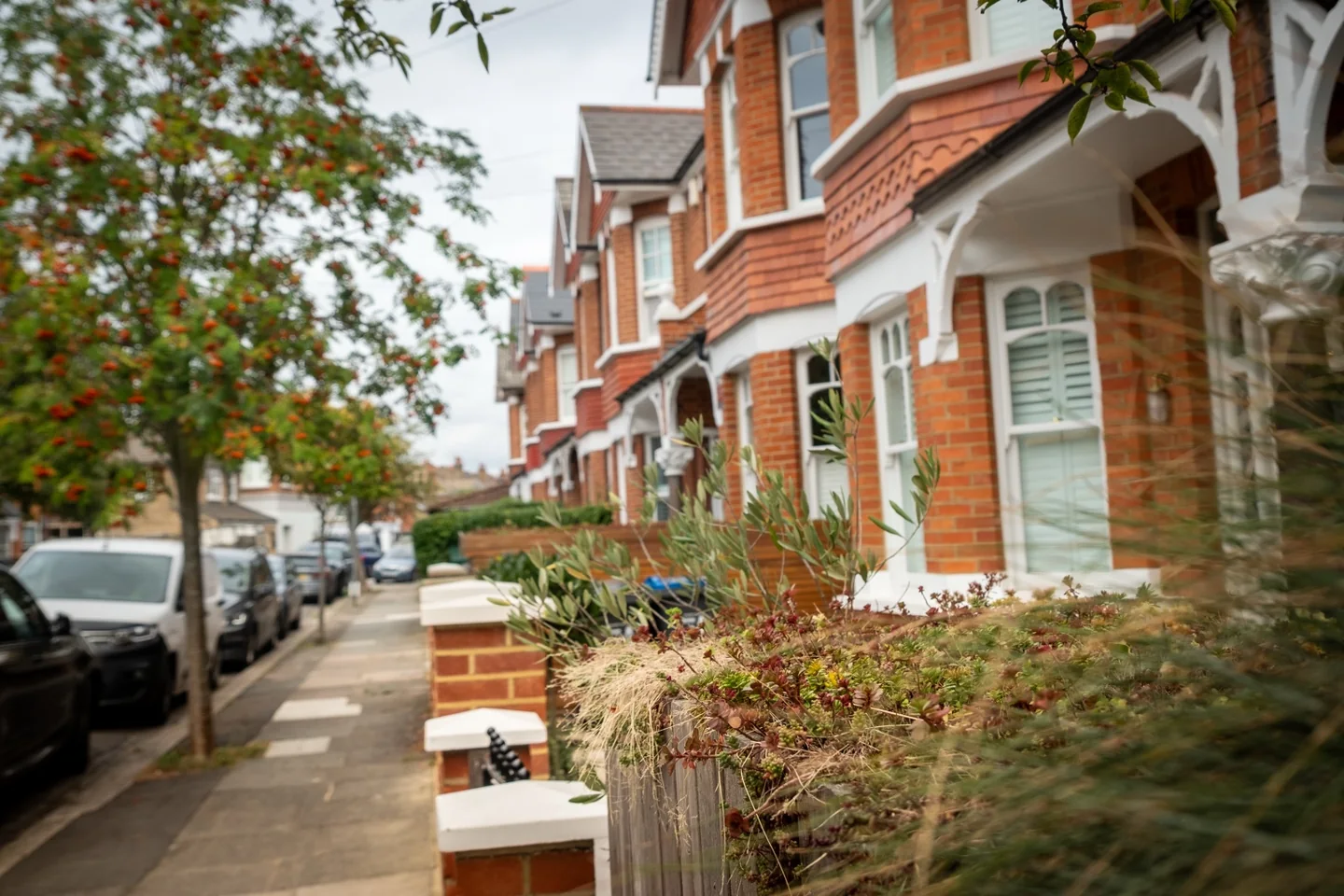
I have walked into a lot of homes in Wimbledon. Period terraces in South Wimbledon where the hallway smells of fresh paint and the vendor has clearly been up since six. Edwardian semis off the Ridgway where the owner opens the door mid-sentence on a phone call and waves me through. Flats where every surface gleams and flats where the cat has claimed the sofa and is not moving for anyone.
After enough of these, you start to notice something. The things sellers worry about (the slightly dated bathroom, the crack above the door frame, whether the garden furniture matches) are almost never the things that determine whether a buyer makes an offer. Buyers are responding to something more instinctive, and it starts before they have reached the living room.
The front door
I know this sounds basic. It is basic. But the walk from the pavement to the front door is where a viewing begins, and most sellers underestimate how much it sets the tone.
A clean path. A front door that looks like someone cares about it. Tidy bins. A working doorbell. These things do not add value in any measurable sense, but they create a feeling: this home is looked after. The opposite impression, formed by peeling paint, an overgrown hedge or a pile of Amazon boxes, takes about three seconds to form and is surprisingly difficult to undo over the next forty-five minutes.
In Wimbledon, where the period housing stock has so much architectural character at the front, this matters even more. A Victorian terrace with a beautifully maintained facade and original tiled path is already telling the buyer a story before they step inside.
The hallway
The most underrated room in any house. Sellers almost never think about the hallway, and buyers almost always notice it.
What they are reading is proportion and light. A hallway that feels generous, well-lit and uncluttered tells a buyer the house has good bones. A hallway crammed with coats, shoes, scooters and reusable bags tells them the house is short on storage: even if it is not.
I see this most clearly in hallways with period detail. Original tiles, a staircase with character or good ceiling height can do a lot of work for a seller, but only if buyers can actually see them. Remove the extra shoe racks, the bags and the visual noise, and the hallway starts to feel like an entrance rather than a corridor.
If your property has period features in the hallway (original tiles, a staircase with character, decent ceiling height), let them breathe. They are doing more selling than you realise.
Light
This is the single biggest factor in how a buyer feels about a room. Not size. Not finish. Light.
A bright room feels larger, warmer and more welcoming than it actually is. A dark room (even a generous one) feels compromised. I have shown buyers around properties with modest square footage that felt wonderful because the light was right, and properties with enormous reception rooms that felt somehow oppressive because they faced north and the curtains were half-drawn.
Before viewings: open every curtain and blind. Clean the windows. Turn on lamps in rooms that do not get direct sunlight. If the weather allows it, open a window. A room that feels fresh and breathable reads entirely differently from one that feels sealed.
This is not staging advice from a magazine, and it is part of how I approach selling property in Wimbledon. This is what I see making a difference, property after property.
The kitchen
For many buyers, the kitchen carries the most emotional weight. It is where they imagine the mornings, the meals, the entertaining. It does not need to be new (some of the most appealing kitchens I have seen in Wimbledon have been older ones with genuine character) but it needs to feel clean, functional and cared for.
Clear the worktops. Remove the drying rack. Wipe down the appliances. These are small actions that shift how the room reads. A kitchen that looks like someone has just finished cooking in it is fine. A kitchen that looks like someone has not cleaned up after cooking in it for three days is a problem.
If the kitchen is dated but functional, do not assume you need to replace it before selling. Sometimes a modest investment (new handles, a fresh splashback, a coat of paint on the cabinet fronts) changes the impression without the cost or disruption of a full refit. But get advice on this before spending money. I have seen sellers invest in improvements that added nothing to the sale price, and I have seen others skip a £500 refresh that would have made a meaningful difference. The right answer depends on the property and the market, not on instinct.
Condition over specification
One of the things I notice consistently in the Wimbledon market is that buyers prioritise condition over specification. A well-maintained 1930s semi with original features and a clean, honest interior will often outperform a recently refurbished property where the quality of workmanship does not hold up to scrutiny.
Buyers here are perceptive. They can tell the difference between a home that has been genuinely cared for over years and one that has been hastily prepared for sale. The former builds confidence. The latter raises questions, and questions, in a buyer's mind, always translate into reasons to negotiate.
The garden
In Wimbledon, outside space carries serious weight. It does not need to be a show garden. It needs to look maintained and usable. Mow the lawn, clear the borders, sweep the patio. If you have space for a table and chairs, set them out. You are not selling the garden as it is: you are selling the buyer a picture of themselves sitting in it on a Saturday afternoon with a glass of something cold.
A neglected garden does not need a full redesign before sale, but it does need to feel cared for. Buyers are usually not expecting perfection. They are looking for evidence that the space is usable, manageable and part of the home rather than an afterthought.
What lingers
After the viewing, when the buyer is at home thinking about what they saw, it is rarely the asking price or the square footage they recall first. It is how the place felt. The warmth of the hallway. The light across the living room floor. The view from the kitchen window. Whether the house felt like somewhere they could picture their life.
Those impressions are the foundation of a good offer. They cannot be manufactured overnight, but they can be cultivated with care, preparation and a clear understanding of what this market actually values.
What to do next
If this article has raised questions about your own property, the next step is a calm conversation. I can look at the property, the market evidence and the practical choices in front of you, then give you a clear view of what I would do next.
Would a measured conversation help?
For evidence-led advice about selling, letting or preparing property in Wimbledon and South West London, speak directly with Brenchley’s.